Contact Us


© Copyright 2023 BeWise & Wisdom Tech Solutions. All Rights Reserved
© Copyright 2023 BeWise & Wisdom Tech Solutions. All Rights Reserved
AUTHOR: Bewise-Admin


A student tries an AI tool for the first time. They type something simple. The tool responds.
They tweak it. The result improves.
Try again. This time it really works.
That moment isn't just curiosity, but learning is happening in real time.
This is exactly how future-ready skills are being built today. Not through memorization, but through genuine engagement and understanding.
For parents searching for the best schools near them, the real question has shifted. It's no longer "Which board is better?"
It's this.
"Is my child learning how to think in an AI-driven world?"
Let's be direct.
AI is no longer a niche specialization. It's becoming woven into how work actually gets done. But here's what most people miss.
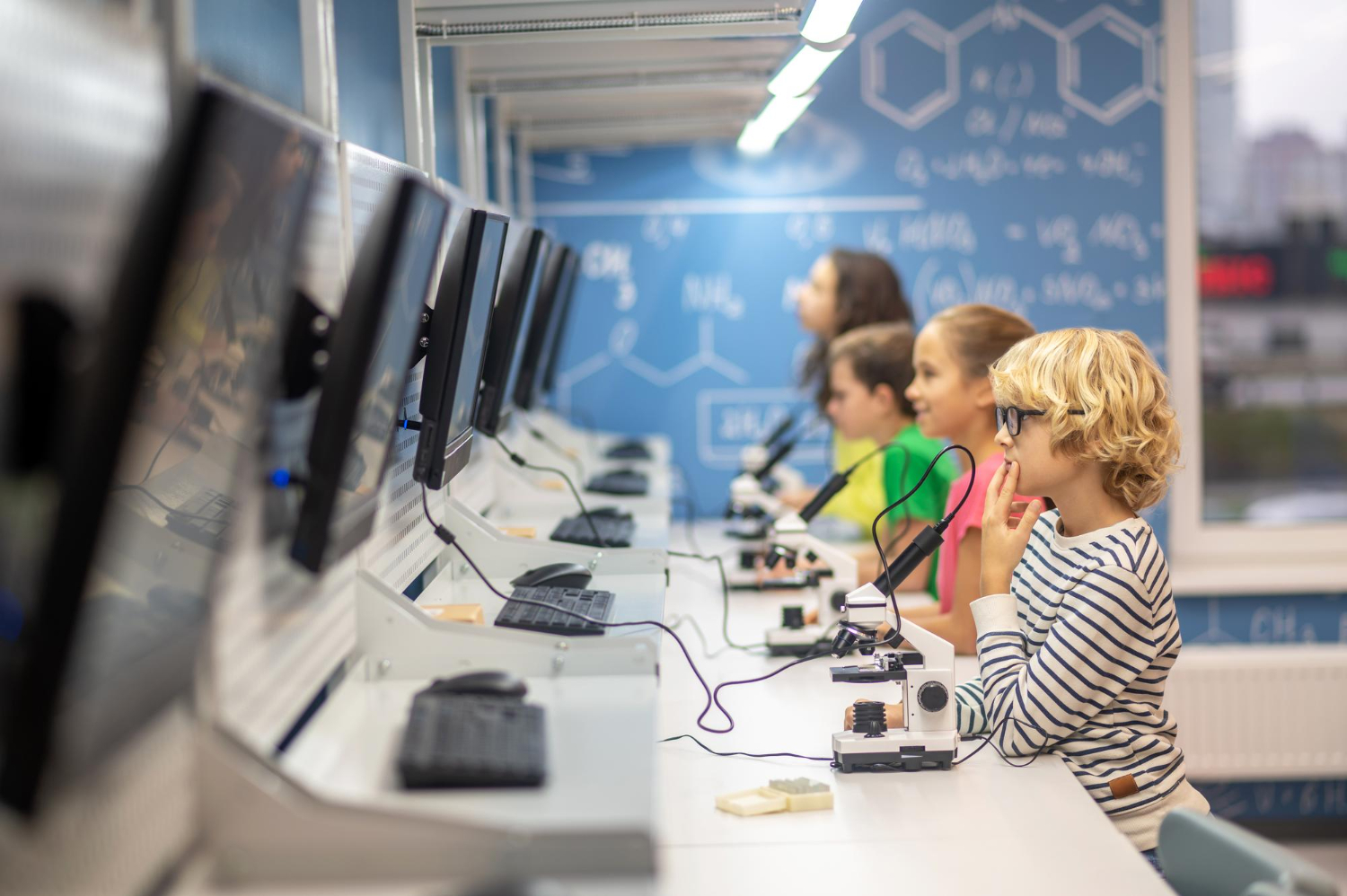
Early learners don't have an edge simply because they've had more exposure to tools. They're ahead because they've grown comfortable with uncertainty. A large-scale public health study shows that active engagement and cognitive stimulation are directly linked to stronger academic skills in children, especially when combined with balanced screen use and real-world interaction. (SpringerLink)
That finding matters as AI learning, when done right, is not passive screen time.
It is active thinking.
Here's the honest reality.
Many AI courses for school students focus on tools rather than thinking, overload students with jargon, and reduce learning to passive video consumption.
That approach doesn't work.
Research from India shows that excessive screen exposure without meaningful engagement can negatively affect children's cognitive, social, and physical development. (PMC)
The goal, then, is not more screen time. It's better learning through interaction.
Stop chasing the "best course." Focus instead on the skills that make any course worth taking.
Everything starts here. Students learn to break problems into steps, recognize patterns, and develop logical reasoning. This is the foundation that skills-based learning programs are built on, and it matters far more than memorizing syntax.
AI isn't absorbed through studying rather it's learned through doing. Strong programs encourage students to test hypotheses, fail without fear, and refine their approach until something works. That process builds confidence, not anxiety.
AI is only as good as the data behind it. Students need to understand what data is, how it shapes outcomes, and why bias enters the picture. This is a foundational future skill and not an advanced one.
What separates average learners from strong ones? Application. Students should work on real-life scenarios, everyday challenges, and simple project-based tasks. This is where life skills education comes in because knowledge that never gets applied simply doesn't stick.
Here's something worth sitting with. AI can generate answers. It cannot replace creative thought. Students need space to generate ideas, weigh different approaches, and design their own solutions. This is the heart of entrepreneurial learning.
This is where many parents feel stuck. The problem was never screens. It's the unstructured use of them. A 2026 study in Mumbai found that increased screen time among school children correlated with poorer physical fitness (ResearchGate).
The fix is simple in principle: reduce passive consumption and replace it with purposeful, guided activity.
Technical skills alone are not enough. Students must learn to articulate their thinking clearly, work within a team, and present their solutions with conviction. This is precisely why soft skills for students are not optional extras but they're career essentials. Future roles will demand both technical fluency and human capability.
Whether you're searching for the best schools near me, the highest-rated schools near me, or doing a schools comparison near me, these are the questions to ask when evaluating any AI course or program:
If the answer to most of these is no, keep looking.
Here's where it gets interesting.
In the coming years, access to AI tools will be universal. Knowing how to operate them will be table stakes. So, what will actually set students apart?

Understanding.
The students who thrive won't just use AI. They'll question it, improve it, and apply it in ways that are genuinely creative and original.
AI will keep evolving. Tools will change. Platforms will improve beyond what we can currently imagine.
But one thing will hold constant.
Students who stay curious, who experiment freely, and who think for themselves will always have the edge.
For parents exploring good schools near them, this is the shift worth paying attention to. Because the goal was never to prepare children for exams.
It's to prepare them for a world that is still being built, one where the students who started early will find that the future feels completely natural.
1. What are the best AI courses for high school students in India?
The best AI courses for high school students focus on hands-on learning, problem-solving, and real-world application rather than theory alone. Look for programs that build computational thinking, basic data understanding, and practical AI tool usage alongside skill-based learning programs.
2. Why should students start learning AI in school instead of waiting for college?
Starting early builds confidence, logical thinking, and adaptability. AI is becoming a core competency across industries, so early exposure sharpens future career skills and prepares students for roles that are still evolving.
3. What skills do students need to succeed in AI-driven careers?
Students need a blend of technical and human capabilities including computational thinking, data literacy, creativity, communication, and problem-solving. These align directly with life skills education and soft skills for students.
4. How can parents choose the right AI course for their child?
Look for courses that are interactive, project-based, and thoughtful about screen time. The right program encourages active learning and real-world application rather than passive consumption especially important when evaluating best schools near me or AI-integrated curricula.
5. Are AI courses safe for kids given the screen time involved?
Yes, when designed with intention. The key is purposeful, guided engagement over passive use. Good AI courses ensure that screen time actively contributes to learning and supports broader education and life skills development